On Looking Again #2: What the Photograph Kept
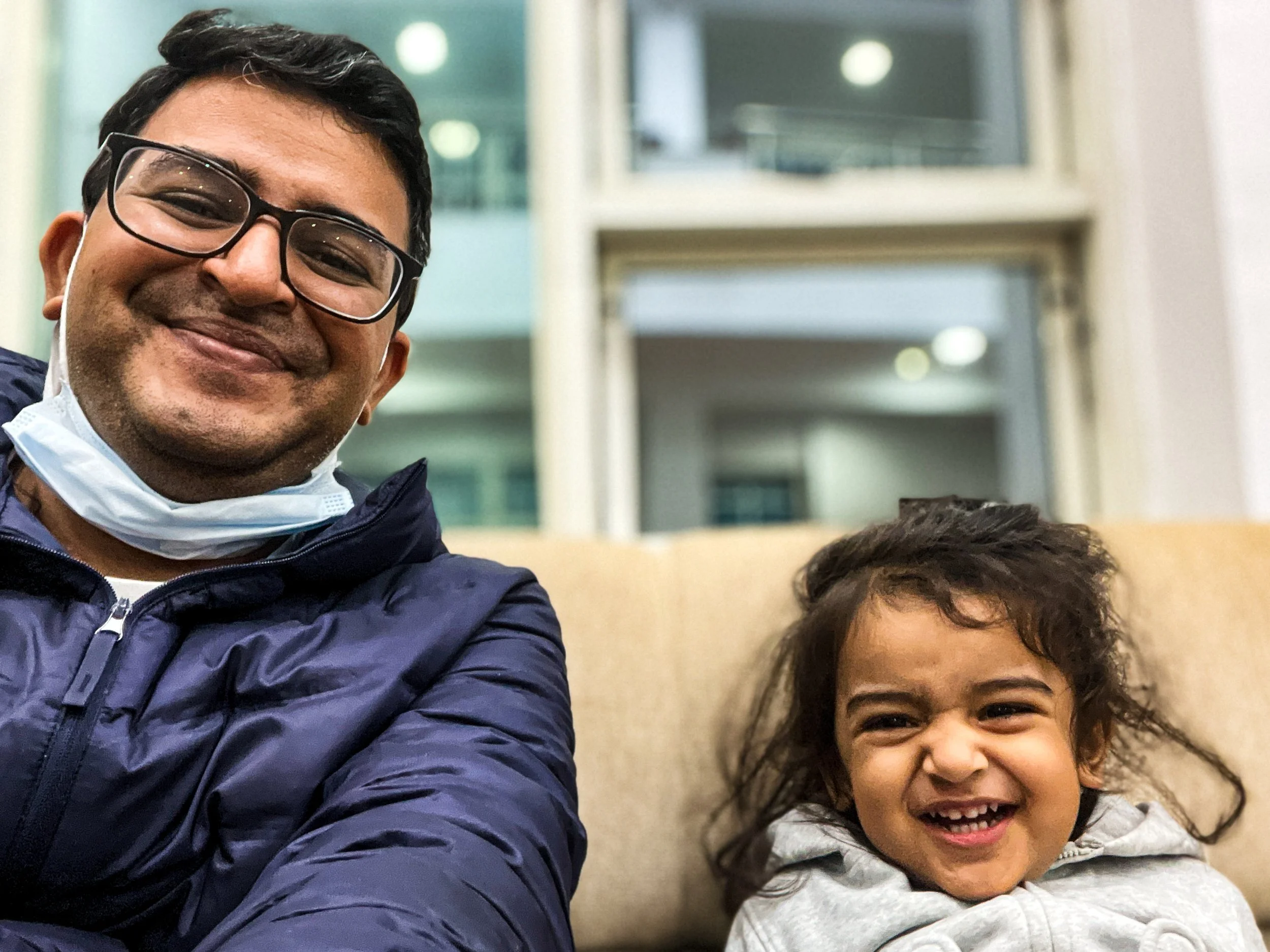
I don’t remember this moment.
Not really.
I know where we are. A guest house in Jaipur. On a trip with the extended family. December 2021. We are waiting in the reception area of a guest house for the rest of the family to come down. Dee is somewhere upstairs. We are waiting to go sightseeing.
Adu is not yet two.
That’s about all I know.
What I do have is this photograph.
For a few moments, it seems, we were the only two people in the world.
I don’t remember what made him laugh. I don’t remember what we talked about, if we talked at all. The photograph has kept none of that.
What it has kept is the smile.
The complete, reckless abandon of it.
I have looked at this photograph many times over the years. At first, I looked at him. Lately, I find myself looking at the space between us.
At the invisible thread that every parent spends years trying to strengthen and then, somehow, learning to loosen.
The photograph doesn’t know any of this, of course.
It knows nothing of school admissions, birthday parties, report cards, arguments, arrivals, departures. It knows nothing of the long work of becoming a person.
It only knows that on a winter morning in Jaipur, a little boy laughed and his father laughed back.
Perhaps that is why I keep taking photographs.
Not because they stop time.
They don’t.
But because every now and then, they return a small piece of it.
Long after the moment itself has gone where all moments go.
On Looking Again #1: What I Thought Was Missing
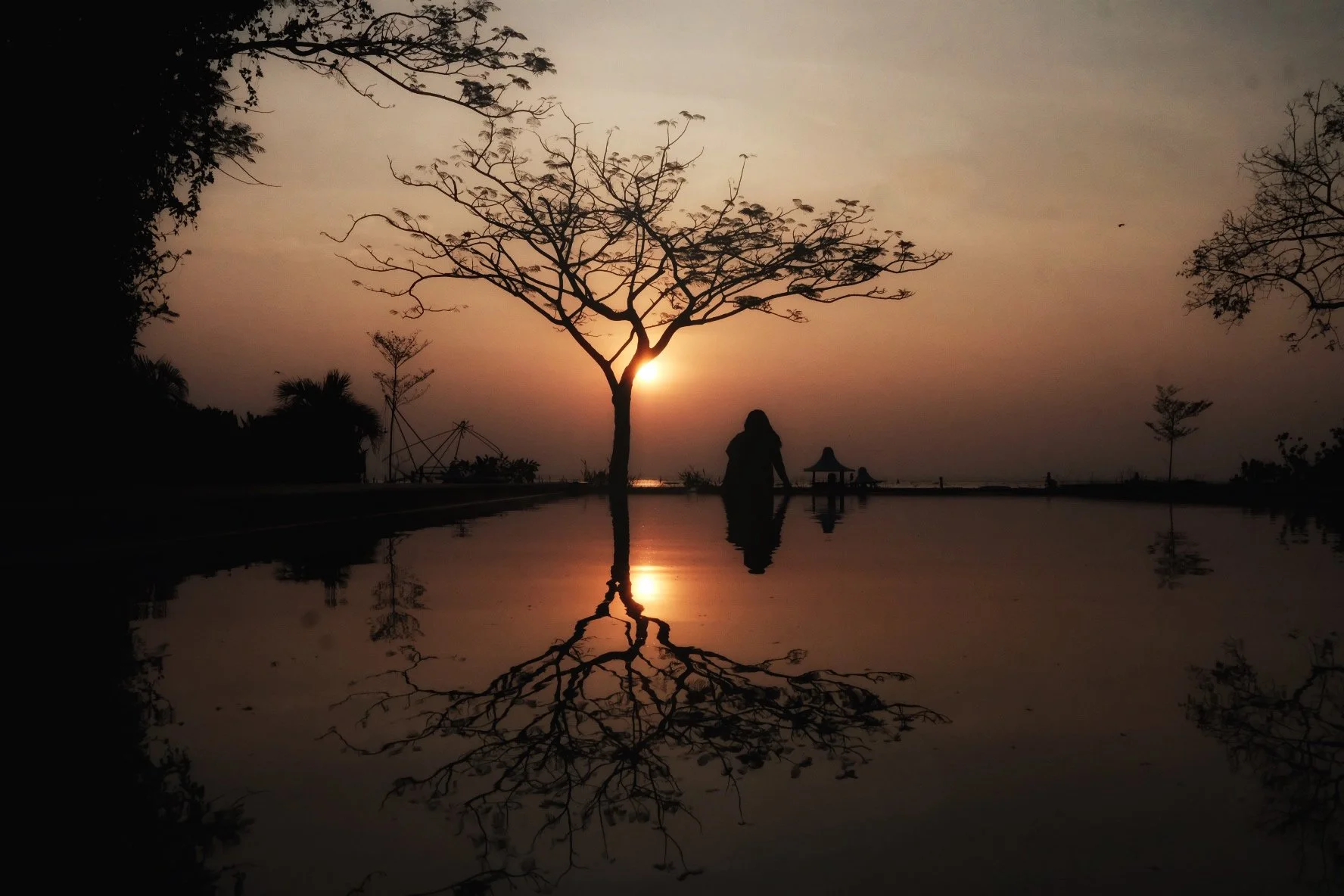
The photographs are better than I remember.
That’s the first thing I notice.
For years, I carried around the memory of being disappointed by that morning. Dee and I had slipped out of our resort room in Kerala before sunrise, leaving Adu asleep, and walked towards the pool with my camera. I must have taken a hundred photographs, but this set was special. Dee sat by the pool while the world slowly emerged from the darkness. The light arrived exactly as it was supposed to. The reflections arrived. The stillness arrived.
Out of the hundred odd photographs, I remember liking very few of them.
Looking at this picture now, I find myself wondering what exactly I thought was missing.
Memory is strange that way. It preserves the dissatisfaction and discards the evidence.
Later that day, I wandered out of the resort and into the nearby village. I met people whose language I didn’t understand and who didn’t understand mine. We smiled, pointed, managed. I found small temples unmarked on Google maps and tour itineraries, though they were no less beautiful than their more famous cousins. By the time I returned, hot, sweaty and thoroughly lost, I felt richer than I had that morning.
Looking back now, I don’t think I was disappointed with the photographs at all.
I think I was beginning to outgrow a certain way of taking them.
The camera had spent years helping me collect beautiful sights. Around this time, I had begun asking it to help me discover something.
The village walk offered that more readily than the resort ever could.
And yet, years later, it is this photograph that has brought the whole day back.
Not the temples.
Not the lanes.
Not the conversations stitched together with gestures.
This one frame.
Perhaps that’s what photographs do best.
They wait quietly for memory to catch up.
Half a day in Orvieto and the absolute importance of looking beyond pictures while traveling
How does it feel to revisit a place you once explored as a different version of yourself?
Yesterday, the Google Photos app on my phone unearthed a treasure trove of memories from my honeymoon in Italy. Six years ago, in June 2017, amidst our Italian odyssey, Dee and I found ourselves in the quaint hillside enclave of Orvieto, a mere two hours from Rome.
A veil of time seemed to drape itself between then and now, simultaneously obscuring and intensifying those moments. Yet, within those photographs, much of that day remains unspoken.
As you gaze at those images and videos we made that day, you'll see the two of us looking pleasantly young, a nondescript train journey, a funicular ride up the mountain (with another tourist hogging the best view throughout the ride), a dive into the pre-Medieval Etruscan past of the town, a most gorgeous church with beautifully painted exteriors and interiors, and a few pictures from the town’s charming streets.
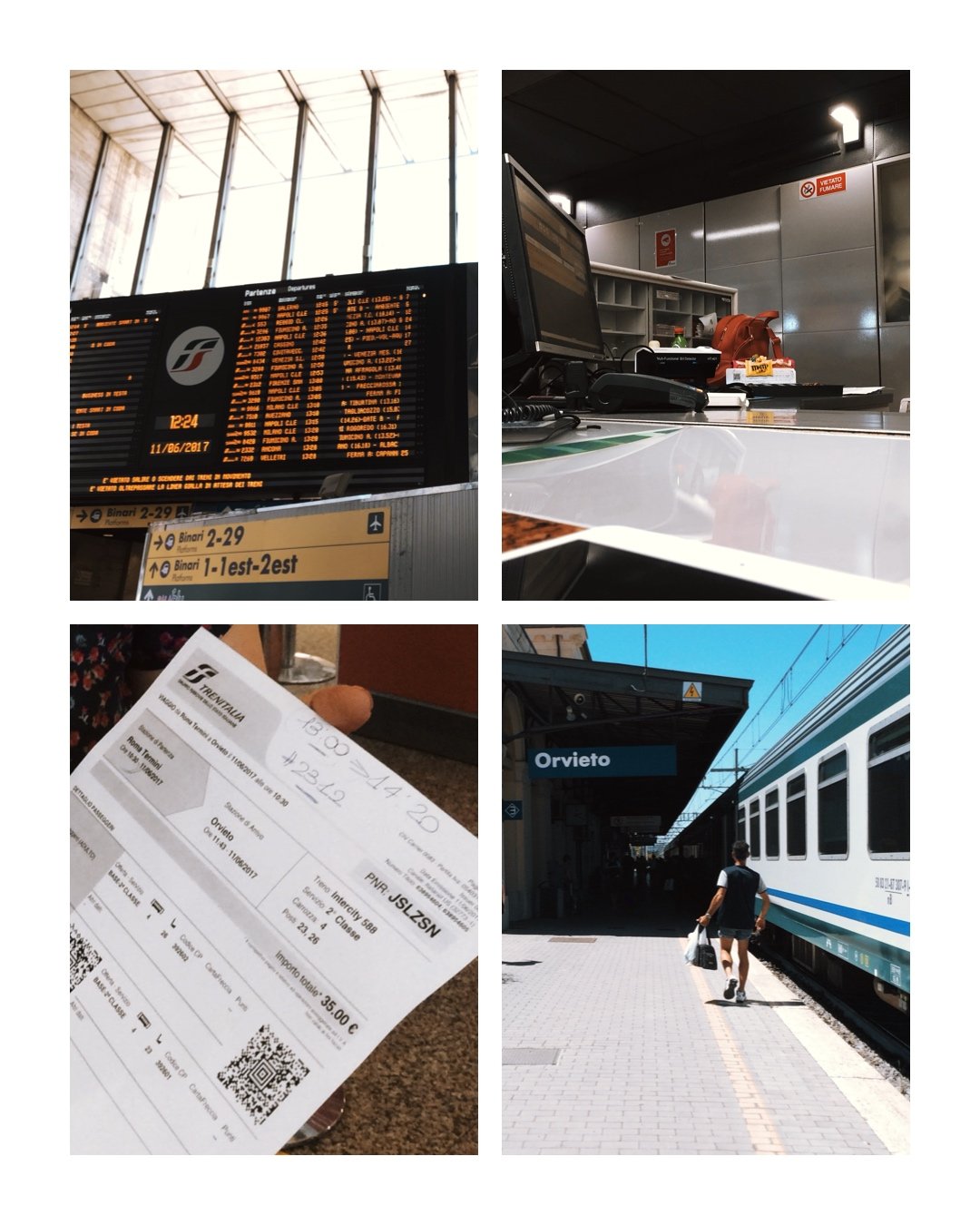
What you won’t see in the pictures is the fight we had because we missed our early morning train; the way I remained sullen for the next many hours, and how, after multiple attempts to cheer me up, Dee had given up and turned equally sour. The two long hours we spent at the Roma Termini station waiting for the next train, talking little, observing the crowd, and interacting with an Indian Italian who briefly shared the pros and cons of living away from his watan in Punjab. Also missing from the photographs is the acute awareness of time slipping away from our already limited grasp.

No photograph will be able to convey the Indianness of our Italian train, its ticket checker attempting to extract an unnecessary fine thwarted by my chance research about those types of scams. The short but beautiful bus ride from the funicular station to the heart of the town, and perhaps the freshest, soaked in olive oil pesto pizza we have ever had won't be captured either. The photographs won’t tell you how, like total nerds, we spent most of our time immersed inside the gorgeous Duomo and missed out on exploring the equally charming town outside.


Yesterday, when I looked at those imperfectly captured photographs from what feels like an era past, I wished there was a way to reach out to that slightly younger version of mine. I wanted to tell him to enjoy Orvieto and all it had to offer but to relish the journey more. To create more memories with the one he was traveling with because cities and towns will come and go; she will be the only constant through those.

