Waiting Room, Planet Earth
11:18 AM.
Waiting for my turn with the doctor. Sitting in the lounge area at the Hospital.
(My Funny Valentine, Chet Baker) “Your looks are laughable, unphotographable, Yet you’re my favorite work of art…”
Reading the introduction to The Book of Disquiet on Kindle. Listening to my favourite songs playlist on my headphones. Looking around.
(We Have All the Time in the World, Louis Armstrong)
“We have all the time in the world, Time enough for life , To unfold…”
A lady on my left is on a video call with an old person. Or maybe with someone holding the phone for them. The old person is the patient. Oxygen mask. Tubes. All kinds of hospital paraphernalia. Then the camera moves and shows the rest of the room. Relatives sitting around with that peculiar silence hospitals produce. The kind where nobody knows what to say anymore but nobody wants to leave either.
On my right, a man scrolls through his recent calls.
(Aanewala Pal, Kishore Kumar)
“हो सके तो इसमें ज़िंदगी बिता दो, पल जो ये जानेवाला है…”
The first name is ‘Mullah Ji.’ The rest are Hindu names. I start wondering if the Mulla ji is this person’s godman of some sorts. Then he opens WhatsApp. Endless religious greetings. Folded hands. Flowers. Gods arriving every morning as forwarded messages.
(The Golden Boy, Parov Stelar)
“I’ve got this feeling inside my bones…”
There are people of all ages here. Most look anxious, tired, pensive. Some seem on the verge of crying. Children alone appear untouched by the atmosphere. They are laughing, running around, asking for chips and cold drinks. They don’t know yet what life eventually becomes.
(Cry Me a River, Dinah Washington)
“Now you say you’re lonely, You cried the long night through…”
Perhaps that’s why childhood matters so much. It may really be the only phase of life where we are protected from the knowledge of what awaits us later. Hospitals. Reports. Medicines. Parents growing old. Our own bodies quietly beginning to betray us.
(Up – Solo Piano Theme)
There are no lyrics here. Only that strange ache the piano carries. The feeling of remembering something while it is still happening.
An old lady sits beside me gingerly, as if sitting down is only slightly less painful than getting up will be. After a while, a man, her son, I assume, comes and holds her hand while helping her stand.
(Look at the Sky, Osman)
“Look at the sky, I’m still here…”
How much of life changes in this simple holding of hands.
She must have done this for him once. Crossing roads. Getting off buses. Walking through markets. Holding his tiny fingers through fevers and fairs and childhood fears. And now life has quietly reversed the whole thing.
I look around at old people who must have once been strikingly handsome or beautiful in their youth. People who must have once looked into mirrors with confidence. Strange how time slowly removes everything we once thought was permanent.
(We Are Nowhere, Bright Eyes)
“We are nowhere and it’s now…”
Then I see a young woman walking across the lounge with an older woman, perhaps her masi, and a younger girl who looked like her sister. She was so beautiful that I couldn’t stop looking at her. Not glamorous-beautiful. Something quieter. Almost painful to look at. Like one of those statues of Mother Mary you see in old churches, except alive. Her eyes looked washed clean. As if life had already rinsed away whatever innocence usually remains at that age.
And yet there was acceptance on her face too. A kind of exhausted peace.
(Primavera, Ludovico Einaudi)
Again no lyrics. Just that flowing piano making the whole lounge suddenly feel like one continuous human tide. People entering. Leaving. Waiting. Hoping.
And I wonder, is there any meaning to all this movement?
All these people gathered inside a building full of corridors and machines where perhaps, years ago, there were only fields and trees.
People trying to save lives.
Trying to return to the lives they had before illness interrupted them.
Trying to welcome new life into the world too.
Sometimes it feels like this hospital lounge is just a smaller version of earth itself.
And I can’t tell anymore whether I am part of this scene or merely observing it. Whether I’m an alien or an Earthling.
Perhaps both.
Perhaps someone else sitting here is also typing something into their phone notebook right now:
Saw a man today. Middle-aged, but young in mannerisms. Wearing headphones. Typing feverishly on his phone. Must be messaging someone.
(In My Life, The Beatles)
“Though I know I’ll never lose affection. For people and things that went before…”
11:48 AM.
Repaying the Debt of Smiles Past
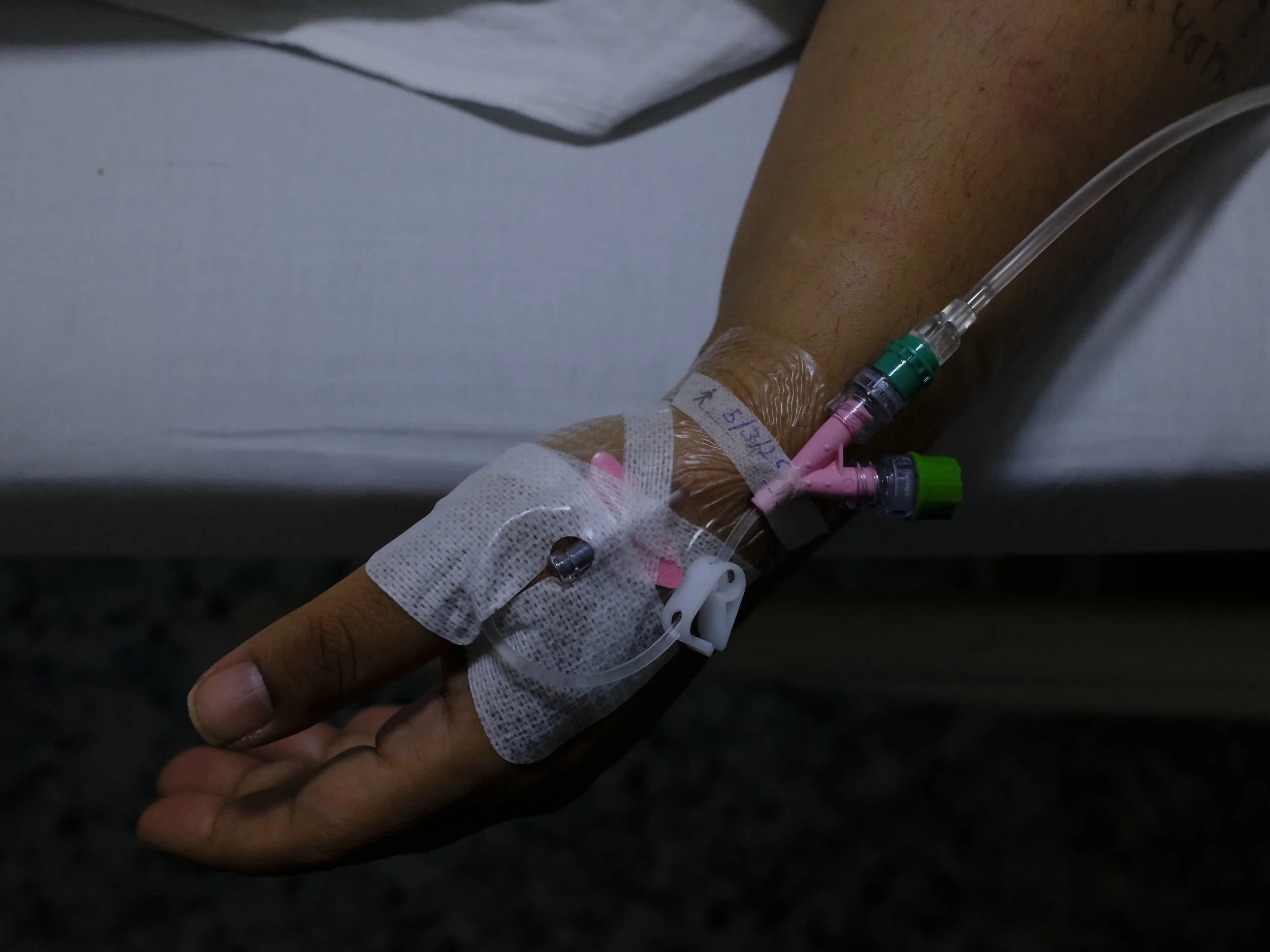
Some mornings feel like a quiet accounting of the life we have lived.
This morning, before the world had properly woken up, I was lying beside my son, running my fingers through his hair. The slow, careful way you touch a sleeping child when you don’t want the spell to break. He has been on medication, breathing unevenly the way children do when the weather turns against them. Another allergy. Another small battle his body is fighting.
A kilometre and a half away, in a hospital room full of loud white light, my wife is fighting pneumonia.
Life has a way of arranging these scenes without asking us first.
…
The mind, when it is worried, rarely stays in the present. It travels. Mine travelled back to the second Covid wave. Those long forty-odd days when my wife was in the hospital and I existed between phone calls, oxygen numbers, and the stubborn hope that she would come home. There were nights when I truly did not know if she would.
And yet she did.
Life returned to its ordinary rhythms. Work. School mornings. Telling each other the strange dreams we had seen the night before. The small arguments that belong only to people who share a life.
…
I turned forty-six earlier this year. Somewhere along the way I have realised something about happiness. And about sadness.
Happiness has always arrived for me slightly tinged with sadness. Even in its brightest moments there is a faint awareness that this too is passing. That the laughter, the sunlight, the quiet warmth of someone I love sitting beside me — all of it will someday dissolve.
Sadness, on the other hand, is pure. It does not pretend permanence. It simply arrives, sits beside me for a while, and slowly merges into me.
Perhaps that is why I try to hold small, insignificant moments a little longer than they deserve.
Long before social media arrived, I used to send SMS messages to friends telling them what I was doing in that moment and asking the same in return. A tiny status update on life.
Maybe that is why I was drawn to writing and image-making, to capture something that will never come back again.
The calm of dust motes floating in a stream of sunlight.
The quiet immensity of a sleeping child’s heart under my palm.
My wife’s voice on the phone saying she is feeling slightly better. Weak, but better.
…
We never really know what is around the corner.
And yet we live as if we do.
We make plans for next summer. We postpone joy for calmer days. We tell ourselves that life will eventually settle into something predictable.
There are lines from a Gulzar song I often return to:
Muskuraoon kabhi, toh lagta hai, jaise hothon pe karz rakha hai. (Whenever I smile, it feels as though a debt has been placed upon my lips.)
I thought I understood it. But some mornings are a refresher course in meaning.
Life has collected its dues before. It probably will again. That seems to be part of the arrangement.
But still, when my son sleeps beside me in the quiet morning, and my wife is fighting her way back to health in that hospital room a kilometre and a half away, I find myself doing the only thing I know how to do.
Living.
Holding the small sharp shards of joy carefully in my hands.
Smiling a little.
Even if life is keeping count.